


Allergy consultation in Monza
If you suffer from symptoms that suggest an allergy, an allergy consultation in Monza allows us to accurately identify the causative allergen and define the most appropriate diagnostic pathway. At Dr. Stefania Milani's practice, every assessment begins with a thorough medical history, followed by targeted allergy tests performed with state-of-the-art equipment. An accurate diagnosis allows us to develop personalized treatment and improve disease control.
Available diagnostic categories:
- Respiratory allergies (pollen, mites, mold, animals)
- Food allergies and nickel syndrome
- Skin contact allergies
- Allergies to drugs and hymenoptera venoms
- Allergic dermatology
The results of the allergy examination in Monza guide the choice between drug therapy, specific immunotherapy, or lifestyle changes.

Prick Test
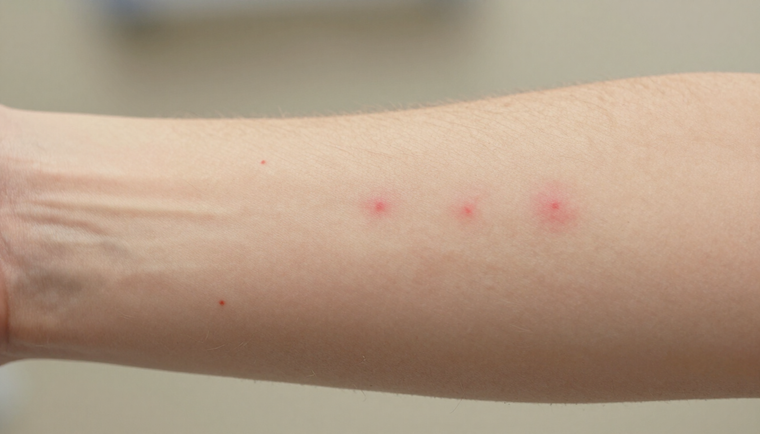
The skin prick test is the most widely used first-line allergy test for identifying IgE-mediated sensitization to inhaled and food allergens. It is quick, minimally invasive, and provides answers during the same visit.
How to do it
A drop of allergen extract is placed on the patient's forearm; a small disposable lancet creates a superficial micropuncture through the drop. After 15 minutes, the skin reaction is read: the appearance of a wheal with a red halo indicates sensitization to the tested allergen.
Testable allergens
- Pollens (grasses, pellitory, birch, olive, cypress)
- Dust mites (Dermatophagoides pteronyssinus and farinae)
- Muffe (Alternaria, Cladosporium, Aspergillus)
- Pets (cat, dog, horse)
- Foods (milk, eggs, tree nuts, peanuts, wheat, fish)
- Hymenoptera venoms (bee, wasp, hornet)
- Drugs (amoxicillin, ASA, NSAIDs)
Interpretation of the result
A wheal ≥ 3 mm compared to the negative control is considered positive. The result is always integrated with the patient's medical history to distinguish asymptomatic sensitization from clinically relevant allergy.
Patch Test
The patch test, also called epicutaneous contact testing, is the gold standard for diagnosing allergic contact dermatitis. It identifies chemicals, metals, or preservatives that, upon repeated contact with the skin, trigger a delayed-type inflammatory reaction (type IV hypersensitivity).
When it is indicated
- Chronic or recurrent eczema of the hands, face, neck, ankles
- Suspected metal allergy (nickel, chromium, cobalt)
- Reactions to cosmetics, perfumes, preservatives
- Allergy to rubber, latex, or adhesives
- Occupational dermatitis (hairdressers, healthcare workers, mechanics)
How it works
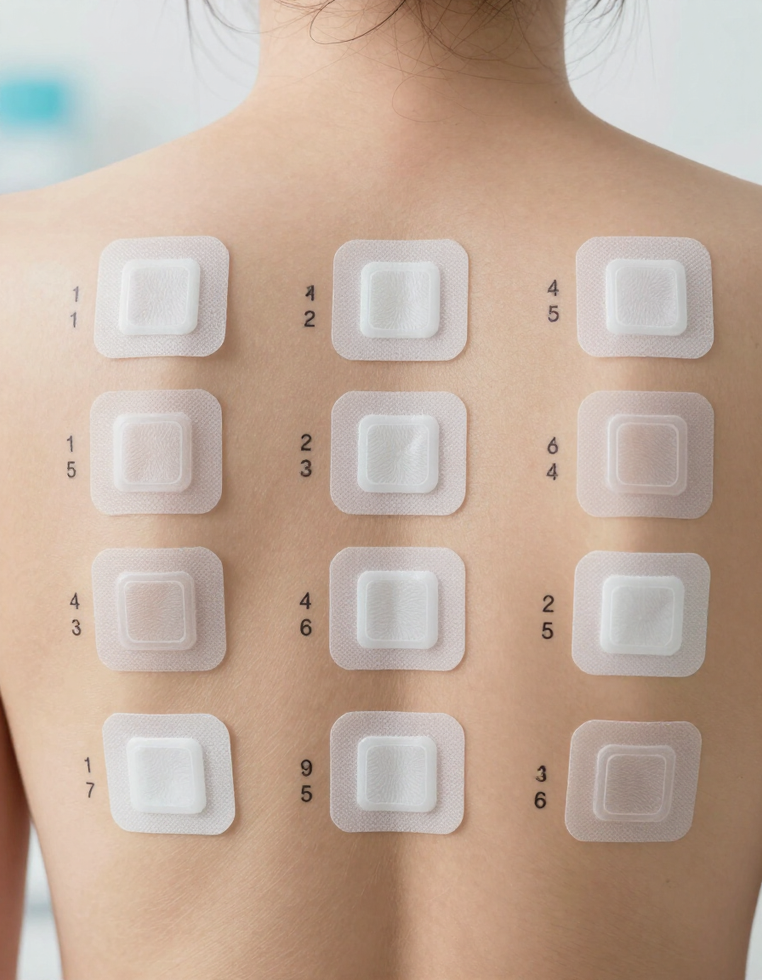
Small amounts of standardized substances are applied to special patches (Finn Chambers) attached to the patient's back. The patches remain in place for 48 hours, after which they are removed and an initial reading is taken. A second, definitive reading is taken 72–96 hours after application, when delayed hypersensitivity reactions are fully detectable. The patient must keep their back dry during the application period.
What the results reveal
A positive patch test reaction manifests as redness, infiltration, or vesicles in the area corresponding to the allergen. Clinical interpretation, combined with the patient's exposure history, allows us to identify the specific cause of the dermatitis and guide the elimination of the responsible allergen.
Extended Epicutaneous Tests
Extended patch tests expand the standard patch test battery to include specific series for inhaled allergens (pollen extracts, dust mites, molds), food (milk, egg, wheat, soy, fruit proteins), and contact allergens, customized based on the patient's medical history. They are indicated when standard patch testing fails to identify the cause of persistent dermatitis or when cross-reactions between food and inhaled allergens are suspected.
Main applications
- Atopic dermatitis with suspected food component
- Pollen-food cross-reactions (oral allergy syndrome)
- Contact allergies to substances not included in the standard battery
- Pre-specific immunotherapy evaluation
Allergy Tests
Allergy tests quantitatively measure the degree of immune system sensitization to specific allergens by measuring specific IgE in the patient's serum (RAST, ImmunoCAP). Unlike the prick test, they do not require discontinuation of antihistamines and can be performed even in the presence of extensive skin lesions, in elderly or pediatric patients.
When they are preferable
- Dermographism or skin lesions that prevent prick testing
- Patients receiving non-suspendable antihistamines
- Young children or elderly patients with low skin compliance
- Monitoring the effectiveness of immunotherapy over time
- Anaphylactic risk assessment from hymenoptera venoms
How to prepare for allergy tests
To obtain reliable results, it's important to follow some practical guidelines before your allergy appointment in Monza. Dr. Milani will provide personalized instructions based on the test prescribed, but below are some general guidelines.
Drugs to be discontinued
- Oral antihistamines (e.g. cetirizine, loratadine, fexofenadine): discontinue 5–7 days before the prick test
- Tricyclic antidepressants: discontinue 7–10 days before (only if directed by your doctor)
- Topical corticosteroids in the test area: discontinue 7 days before
- Systemic corticosteroids: evaluate with a specialist on a case-by-case basis
Never stop taking any medication without first consulting your doctor or Dr. Milani.
General precautions
- For the patch test: do not wet your back for 48 hours; avoid intense physical activity that causes profuse sweating.
- Wear comfortable and accessible clothing for the forearm (prick) or back (patch)
- Report any active skin infections, pregnancy or breastfeeding to the specialist.
- Do not apply any creams or lotions to the area to be tested on the day of the test.
What to expect during the session
The prick test typically lasts 20–30 minutes, including the post-application wait. The patch test requires two or three visits to the office (application, initial reading at 48 hours, final reading at 72–96 hours). The tests are minimally invasive: mild local itching may appear at the application site, which resolves spontaneously within a short time. In the event of systemic symptoms, the office is equipped to manage reactions.

Frequently Asked Questions About Allergy Testing
Clear answers to the most common questions before your diagnostic visit.
How long does an allergy test session last?
The prick test takes 20–30 minutes to complete. The patch test requires three separate visits: application (15 minutes), removal, and initial reading at 48 hours, and final reading at 72–96 hours. The initial allergy consultation preceding the tests lasts approximately 30–45 minutes.
Are tests harmful?
The prick test uses a disposable lancet that creates a superficial, virtually painless micropuncture. The patch test is completely non-invasive: adhesive patches are applied to the back. You may feel a slight itch at the application site, which indicates a positive reaction and resolves spontaneously.
From what age can the tests be performed?
The prick test can be performed on children as young as 2–3 years of age. The patch test is generally recommended for children aged 5–6 and older. Dr. Milani will evaluate the appropriateness of the test based on the patient's age and cooperation.
When can tests not be performed?
Testing cannot be performed in the presence of active eczema or extensive skin lesions in the area to be tested, during an acute phase of an allergic or anaphylactic reaction, during pregnancy (subject to specialist evaluation), or in patients unable to discontinue antihistamines. In these cases, Dr. Milani may recommend allergy testing (specific IgE measurement).
Are test results always reliable?
Reliability depends on proper patient preparation (suspension of interfering medications), the quality of the allergen extracts used, and the operator's experience in performing and interpreting the test. A positive test does not necessarily mean a clinical allergy: the result must always be contextualized by the specialist with the patient's medical history.
Do I need to bring any tests from before the visit?
It's helpful to bring any previous blood tests (total and specific IgE levels), previous allergy reports, and an updated list of medications you're taking. This information will allow Dr. Milani to plan the most appropriate battery of tests and avoid unnecessary diagnostic duplication.
Still have questions? Book an allergy consultation and receive personalized answers from Dr. Milani.
Studio in Monza · Via Maggiolini 9/A
Allergy consultation in Monza
If you'd like to clarify the origin of your symptoms or receive a specialist evaluation, Dr. Stefania Milani is available to guide you through a personalized diagnostic and therapeutic process.


